
Electric vehicles are no longer a “future workshop” problem. They are already arriving in service bays, often mixed in with petrol, diesel and hybrid vehicles on the same day. For independent workshops, the question is not whether EV diagnostics will matter, but how quickly the team can become confident, safe and profitable when working around electric and hybrid systems.
Preparing for EV diagnostics does not mean replacing everything in the workshop overnight. A smarter approach is to build capability in stages: understand the safety risks, train technicians properly, choose the right diagnostic tools, and create a process for when EV jobs come through the door.

Start With High Voltage Safety
EV diagnostics begins before the scan tool is plugged in. Hybrid and electric vehicles use high-voltage systems that require different safety procedures from traditional 12V vehicle work. Workshops should have a clear process for identifying EVs, checking warning labels, isolating the vehicle when required, and making sure only trained staff work on or near high-voltage components.
For Australian workshops, it is worth reviewing guidance from SafeWork NSW on electric vehicles and WorkSafe Victoria’s guide to working on hybrid and electric vehicles safely. These resources are useful because they focus on real workshop hazards, including inspection, maintenance, repair, modification and recovery work.
Training should also be treated as part of the tooling investment. National training units such as AURETH4003 – Test and repair high voltage battery systems in battery electric vehicles show the kind of skills technicians are expected to develop when moving beyond basic servicing into high-voltage battery diagnosis and repair.
Build an EV Diagnostic Workflow
A good EV diagnostic workflow usually starts with the same foundation as any modern vehicle: scan the vehicle, read fault codes, check live data, confirm system communication and understand the customer complaint. The difference is that EV faults may involve the battery pack, thermal management, charging system, high-voltage interlock circuit, insulation resistance, drive motor control or DC/DC conversion.
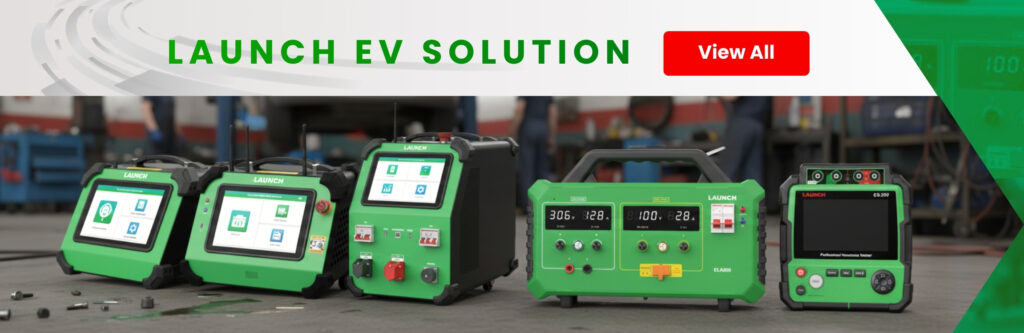
This is where an EV-capable scan tool becomes important. For workshops beginning to see more electric vehicles, the CRP 919 EV is a practical entry point into electric vehicle diagnostics. It supports more than 90 EV diagnostic software packages, including brands such as Tesla, BMW, MINI, VW, Audi and BYD, and offers functions such as DTC reading and clearing, live data, bi-directional control, guided functions, coding and version information. It also supports DoIP and CAN FD protocols, which are becoming increasingly important on newer vehicles.
For workshops that still handle a wide mix of conventional vehicles, hybrids and early EV-related work, the CR981 Code Reader can cover everyday OBDII/EOBD diagnostics and common reset functions. It includes oil reset, EPB reset, BMS reset, SAS reset, DPF reset, TPM reset, throttle matching, ABS brake bleeding, tooth learning, anti-theft matching and injector programming. That makes it useful as a general front-counter or quick-check tool before moving into deeper EV diagnostics.
Prepare for Battery Pack Testing
EV battery issues can be difficult to diagnose without the right equipment. A basic fault scan may point the technician in the right direction, but battery pack condition, sealing, leakage and safety checks often require more specialised tools.
For battery pack sealing checks, the ELT500 Battery Pack Airtightness Tester is designed for non-destructive airtightness testing using compressed air. It uses high-sensitivity pressure sensing to detect pressure changes and displays the process pressure curve in real time. This type of equipment is useful when checking whether a battery pack enclosure can maintain proper sealing after service, repair or inspection. The ELT500 also allows technicians to preset parameters such as workpiece number, volume, pressure, test time and leakage limits, with sound and light alarms for abnormal or failed tests.
For workshops preparing to work more seriously with EV battery systems, this kind of testing matters because battery pack sealing is not just a repair quality issue. It is connected to moisture protection, long-term reliability and customer confidence.
Add Stable Power Support
EV diagnosis often involves long test sessions, software procedures and component-level checks. A stable power supply helps keep the job controlled, especially when working with modules, battery-related systems or bench testing.
The ELA400 Intelligent Digital Power Supply is built for workshop power supply support, with Launch Europe listing it as a 4,000W intelligent digital power supply. It is designed for high and low voltage output requirements, with separate high-voltage and low-voltage circuits, independent protection mechanisms, and protection against overvoltage, undervoltage, overcurrent, short circuit and temperature issues. For EV work, that kind of controlled power support can help technicians test more accurately instead of guessing around unstable voltage conditions.
Don’t Try to Become an EV Specialist Overnight
The best workshops do not jump straight from basic servicing into full battery pack repair without a plan. A more realistic pathway is:
- Train staff in EV awareness and high-voltage safety.
- Add an EV-capable scan tool for system diagnosis.
- Create clear isolation and job approval procedures.
- Build confidence with hybrid and EV servicing tasks.
- Add battery pack and power supply equipment as EV jobs increase.
This staged approach keeps the investment practical. A workshop may begin with a tool like the CR981 for general diagnostics and resets, move into EV system diagnosis with the CRP 919 EV, then add specialised equipment such as the ELT500 and ELA400 when battery pack testing and EV module work become regular jobs.
Final Thoughts
EV diagnostics is not just about buying one scan tool and calling the workshop “EV ready”. It is a mix of training, safety procedures, diagnostic process and the right equipment for the jobs your workshop actually wants to take on.
For workshops preparing now, the opportunity is clear. Customers will increasingly need servicing, fault diagnosis, charging system checks, battery-related testing and repair guidance for hybrid and electric vehicles. With the right EV diagnostic tools and a sensible safety-first workflow, independent workshops can stay relevant, build customer trust and turn EV servicing into a real business advantage.

